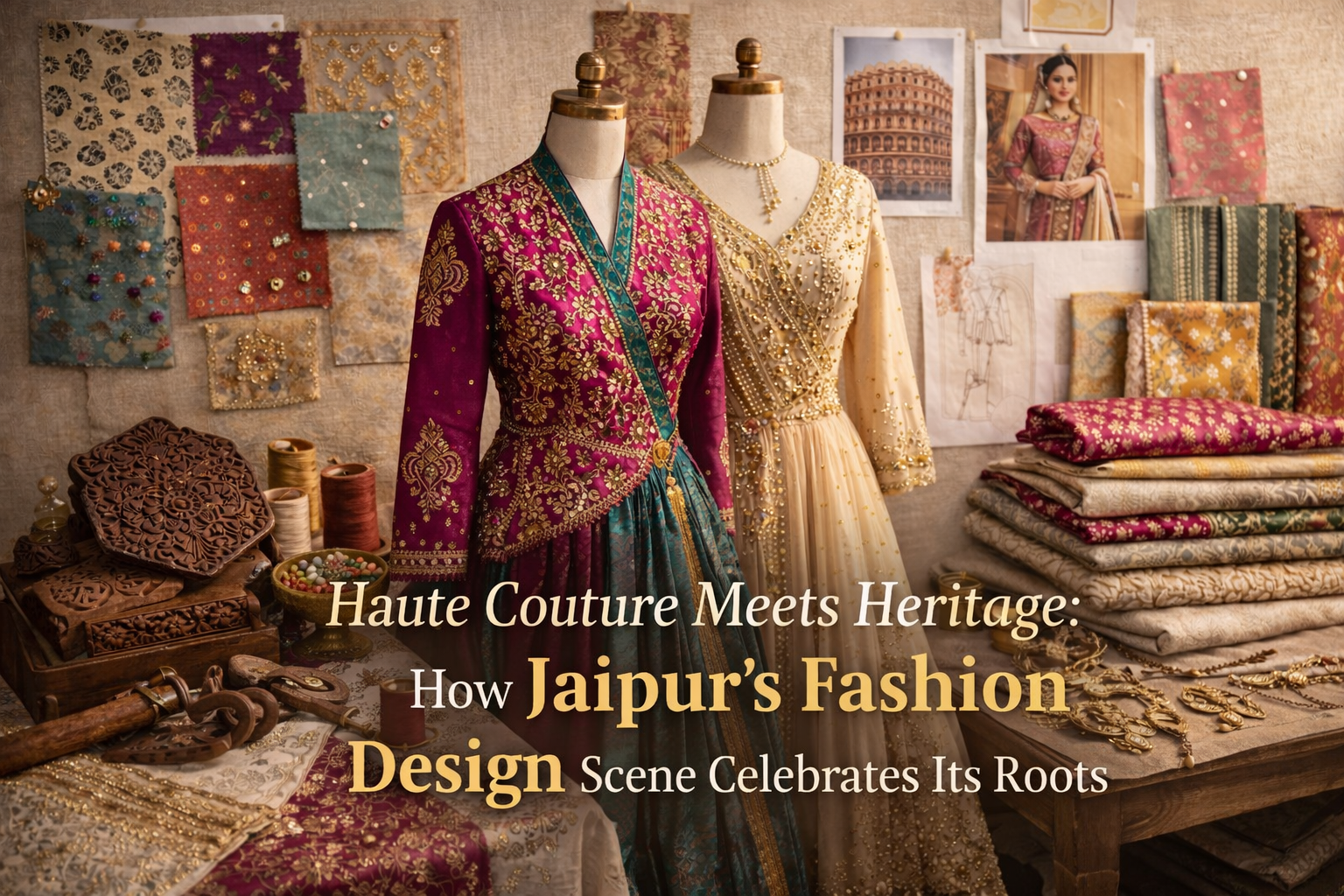
Walk through Jaipur’s bazaars or step inside a modern design studio and you will notice something special. The same city known for centuries-old hand block prints is now producing sharp jackets, flowing gowns, and couture collections for global buyers. That mix of old and new is what makes fashion design in Jaipur so exciting today.
This is not about copying history. It is about learning how to reshape it for the present.
For people thinking about design careers in India, Jaipur offers real-world lessons in how craft, business, and creativity work together. Here, heritage is not just inspiration for a sketchbook. It is a living system that designers study, question, and build upon.
Where Fabric Comes First
In Jaipur, design usually begins with textiles. Sanganeri and Bagru prints bring soft patterns and structure. Bandhani and leheriya add movement through colour. Gota patti and zardozi embroidery recall royal clothing from the past.
What keeps these techniques relevant is how they keep changing. Motifs are enlarged or simplified. Borders appear on jackets instead of hems. Natural dyes are mixed with trend-driven shades.
In fashion design in Jaipur, many designers study fabric processes before drawing silhouettes. Knowing how a block is carved or how dye behaves on cotton helps them make smarter decisions later. That habit leads to collections that feel thoughtful rather than decorative.
Royal Shapes, Modern Lives
Traditional garments still influence today’s couture. Angarkhas, anarkalis, and lehengas inspire new collections, but rarely appear exactly as they once did. Lines are cleaner. Volumes are reduced for everyday wear. Embellishment is placed carefully instead of covering everything.
This approach teaches a strong design principle. Do not copy the archive. Understand it, then translate it.
Jaipur’s studios show how historic ideas can turn into clothing that works for modern lifestyles while keeping cultural depth intact.
Working with Craftspeople
Another reason the city stands out is its close relationship with artisan communities. Many designers collaborate directly with embroiderers, dyers, and weavers instead of treating craft as a back-end process.
This creates two clear outcomes:
- Traditional skills stay alive because they find new markets and new uses.
- Innovation grows through discussion, as makers and designers experiment together with scale, colour, and placement.
Anyone learning fashion design in Jaipur quickly realises that ethics and creativity go hand in hand. Knowing who made a textile and how it was developed adds meaning to the final garment.
Why Jaipur Feels Like a Classroom
Jaipur works like a giant studio space. Fabric markets make sourcing tangible. Dye houses reveal how colour chemistry works. Pattern rooms show how embroidered fabrics behave once cut and stitched.
That is why institutes such as NIF Global encourage learners to study craft clusters alongside runway design. Watching production in real settings builds realistic understanding of timelines, pricing, and quality control. It also strengthens research skills, which separate serious collections from surface-level ones.
The Direction the City Is Taking
Sustainability is shaping Jaipur’s next phase. Designers are returning to handlooms, cutting down chemical dyes, and turning leftover fabric into luxury patchwork. Digital tools now sit beside wooden printing blocks without conflict.
This balance keeps fashion design in Jaipur relevant in a global market that increasingly values transparency and cultural honesty.
Carrying Tradition into the Future
Jaipur proves that fashion does not need to choose between past and present. It can respect both, as long as designers stay curious and disciplined.
For those hoping to build careers in couture or craft-led ready-to-wear, the takeaway is clear. Heritage is not something to imitate blindly. It is something to study carefully, reinterpret smartly, and carry forward with purpose.

Leave a Reply