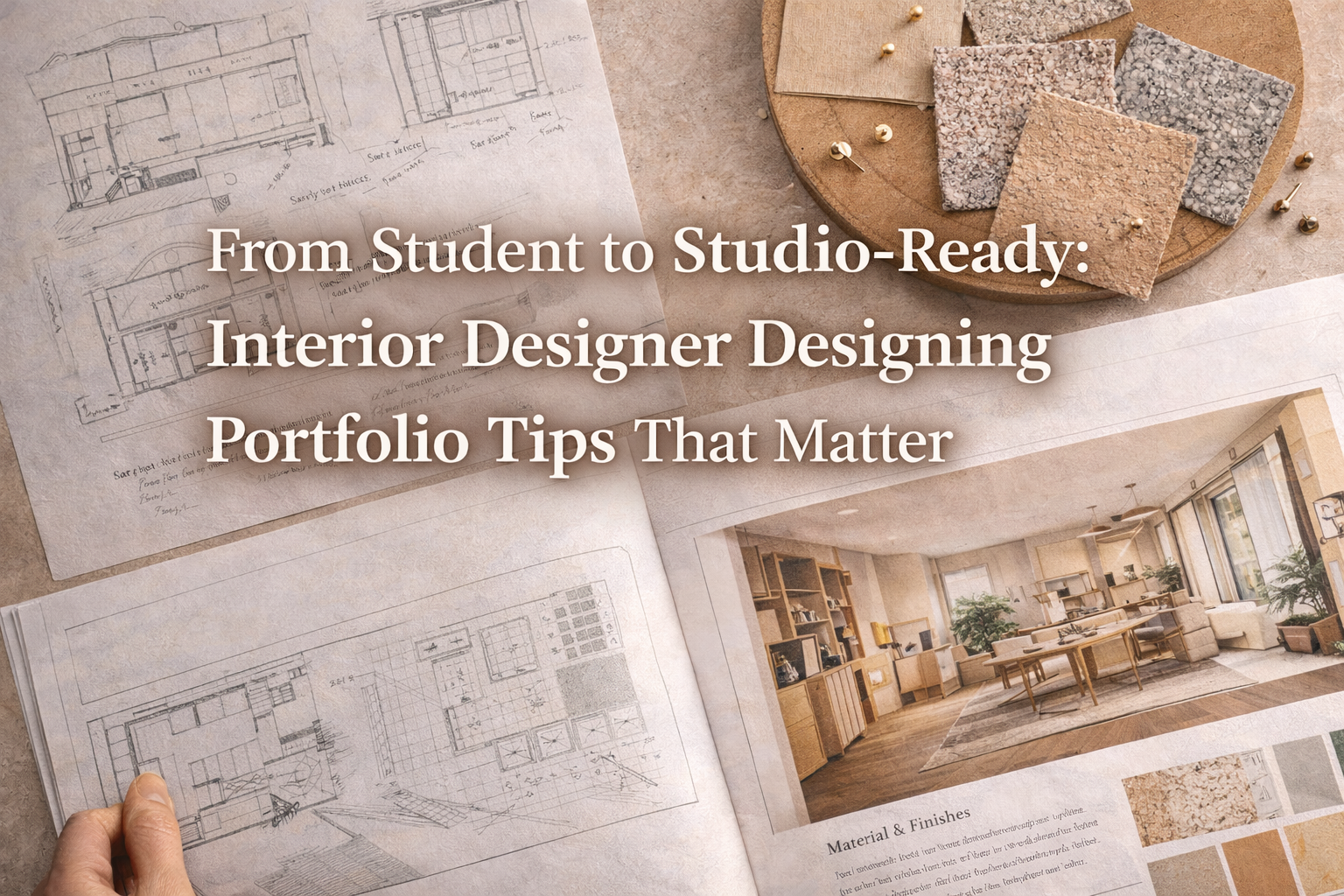
Your portfolio is often the first thing studios, recruiters, or clients see. Before interviews, before conversations, before internships, they scroll through your work. That is why getting it right matters so much.
Strong portfolios do not depend only on flashy renders. They show thinking, clarity, and decision-making. The best ones guide the viewer through ideas instead of overwhelming them. If you are preparing to apply for design program, or entry-level roles, learning solid interior design portfolio tips early can save months of rework later.
This article looks at refinement, visual order, and how to present projects in ways that match industry expectations.
Think Like the Viewer, Not the Designer
A common mistake is building portfolios only from the creator’s point of view. You already know the story behind each project. The person reviewing it does not.
Professionals want to understand three things quickly: what the brief was, how you approached it, and what the final outcome looks like. Each project should open with a short explanation in simple language, followed by key visuals that support that narrative.
In strong interior design portfolio tips, clarity always comes before decoration.
Create Visual Hierarchy on Every Page
Visual hierarchy decides where the eye goes first. If everything looks equally important, nothing stands out.
Use scale and spacing to guide attention. Hero images should dominate the page. Supporting drawings, plans, and material boards should feel organized around them. White space is not empty space, it gives breathing room and helps the work feel confident.
Keep fonts limited to one or two families. Use headings consistently. Align edges cleanly. These small choices signal professionalism long before anyone reads the captions.
Refine, Do Not Overload
Another trap is showing too much. Ten average projects weaken your portfolio more than five strong ones.
Edit ruthlessly. Include work that shows different skills such as space planning, lighting concepts, furniture layouts, or residential versus commercial thinking. Remove exercises that feel unfinished or repetitive.
Refinement means polishing what stays. Clean up linework. Re-export drawings at high resolution. Correct color shifts between pages. These details quietly separate student work from industry-ready presentations.
Show Process Alongside Final Images
Studios like to see how you think, not just what you produce.
Good interior design portfolio tips always include process material. This might include concept sketches, zoning diagrams, site analysis, or early layout options. Keep these concise and clearly labelled so they support the final design instead of distracting from it.
A useful balance usually includes:
- One or two pages of concept and planning to explain the design logic.
- Final visuals such as renders, sections, and styled views that show execution quality.
This tells reviewers you can move from idea to resolution, not just produce attractive images.
Match Industry Expectations
Interior studios care about practical thinking. Make sure drawings are readable. Plans should have scale bars. Furniture layouts must make sense. Materials should be realistic and buildable.
If you are targeting Indian firms, reflect local contexts where possible. Climate response, spatial efficiency, and budget awareness matter. Institutes like NIF Global often guide learners on aligning portfolios with professional standards so their work speaks the language studios recognize.
Present with Confidence and Consistency
Whether printed or digital, the portfolio should feel like one coherent document, not a collection of unrelated PDFs. Maintain the same grid system across pages. Use consistent margins and colour palettes. Number pages clearly.
The cover should be simple and strong, your name, discipline, and contact details are enough. Let the work do the talking.
Closing Thoughts on Building a Strong Portfolio
A professional portfolio is not about impressing with excess. It is about communicating design thinking with control and clarity.
By applying these interior design portfolio tips, focusing on hierarchy, refinement, and smart presentation, you position your work closer to what studios actually want to see. Treat the portfolio as a design project in itself, research the audience, edit carefully, and present every page with intention.

Leave a Reply