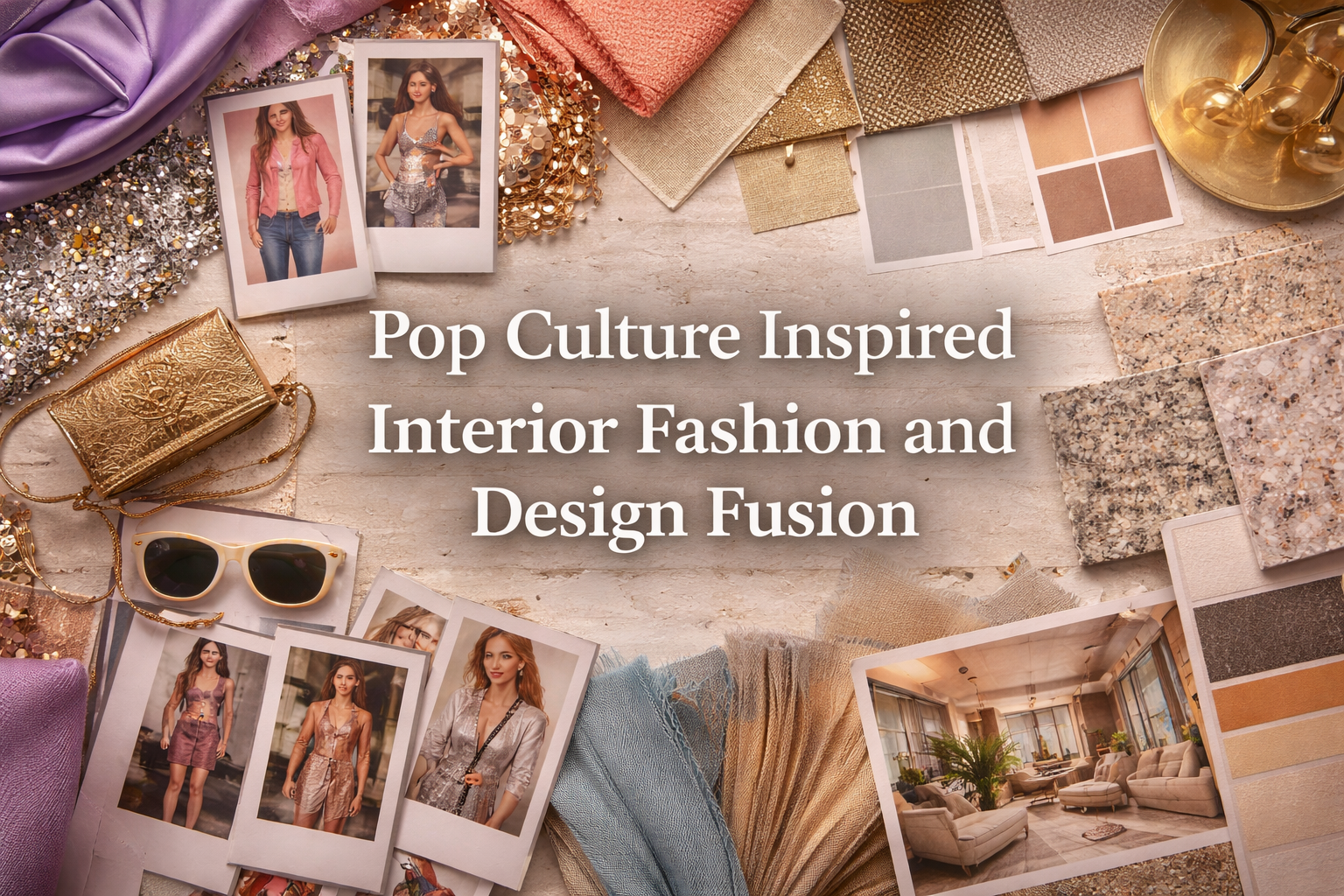
Films, OTT shows, music videos, and social media now shape taste faster than magazines or catalogues ever did. They influence color choices, silhouettes, textures, and moods long before those ideas reach studios, showrooms, or homes.
When the same cultural forces start guiding both clothing and interiors, designers describe it as pop culture inspired design. For fashion and interior students across India, learning to recognize and interpret this shift is no longer optional. It is part of becoming a designer who understands the world they are creating for.
Why Pop Culture Shapes Design So Quickly
Visual culture travels at extreme speed. A film aesthetic, a music video set, or a viral reel can reach millions within days. These images quietly reset expectations about what feels modern, luxurious, playful, or experimental.
Fashion absorbs these signals first because garments are fast to produce and style. Interiors respond more slowly, translating the same moods into wall colors, furniture shapes, lighting strategies, and retail environments. Students who understand this pattern learn how trends migrate across industries instead of treating fashion and interiors as isolated fields.
Where Fashion and Interiors Intersect Today
Across Indian cities and towns, similar design languages are showing up in both wardrobes and spaces. Softer color palettes appear in everyday wear and cafés. Retro details resurface in accessories and residential décor. Handcrafted textures influence clothing surfaces and upholstery alike.
These parallels are not accidents. Designers in different disciplines are responding to the same cultural climate, shaped by entertainment, digital media, and changing lifestyles.
Learning to Analyze Instead of Imitate
The biggest mistake young designers make is copying what is popular without understanding why it works. Strong professionals slow down and break trends into parts. What colors dominate. Which materials repeat. What emotions the designs create. Which cultural references make them feel familiar or aspirational.
This analytical habit turns surface inspiration into original work. Institutes like NIF Global encourage students to build exactly this kind of observational skill so they can translate cultural signals into thoughtful, distinctive designs.
How Students Can Apply This in Studio Work
This theme fits naturally into portfolio projects and classroom briefs.
Students can:
- Build mood boards from films, campaigns, or digital culture and develop both a garment and a space from the same reference
- Design a capsule collection alongside a small interior setting such as a café corner or retail display
- Translate street fashion colors into upholstery or wall treatments
- Explore one cultural mood across residential, commercial, and clothing concepts
These exercises demonstrate research ability, storytelling, and cross disciplinary thinking, qualities studios increasingly value.
Why This Matters for Your Future Career
Design careers today are rarely limited to one box. Graduates move into fashion houses, interior studios, retail design teams, exhibition spaces, visual merchandising, and even film or set styling.
Understanding pop culture inspired design helps you stay relevant without chasing every viral trend. It trains you to observe society, anticipate shifts, and create work that feels current while still rooted in local context.
The strongest designers in India’s next generation will not be the ones who copy what they see on screens. They will be the ones who study culture carefully and turn everyday influences into confident design decisions.

Leave a Reply