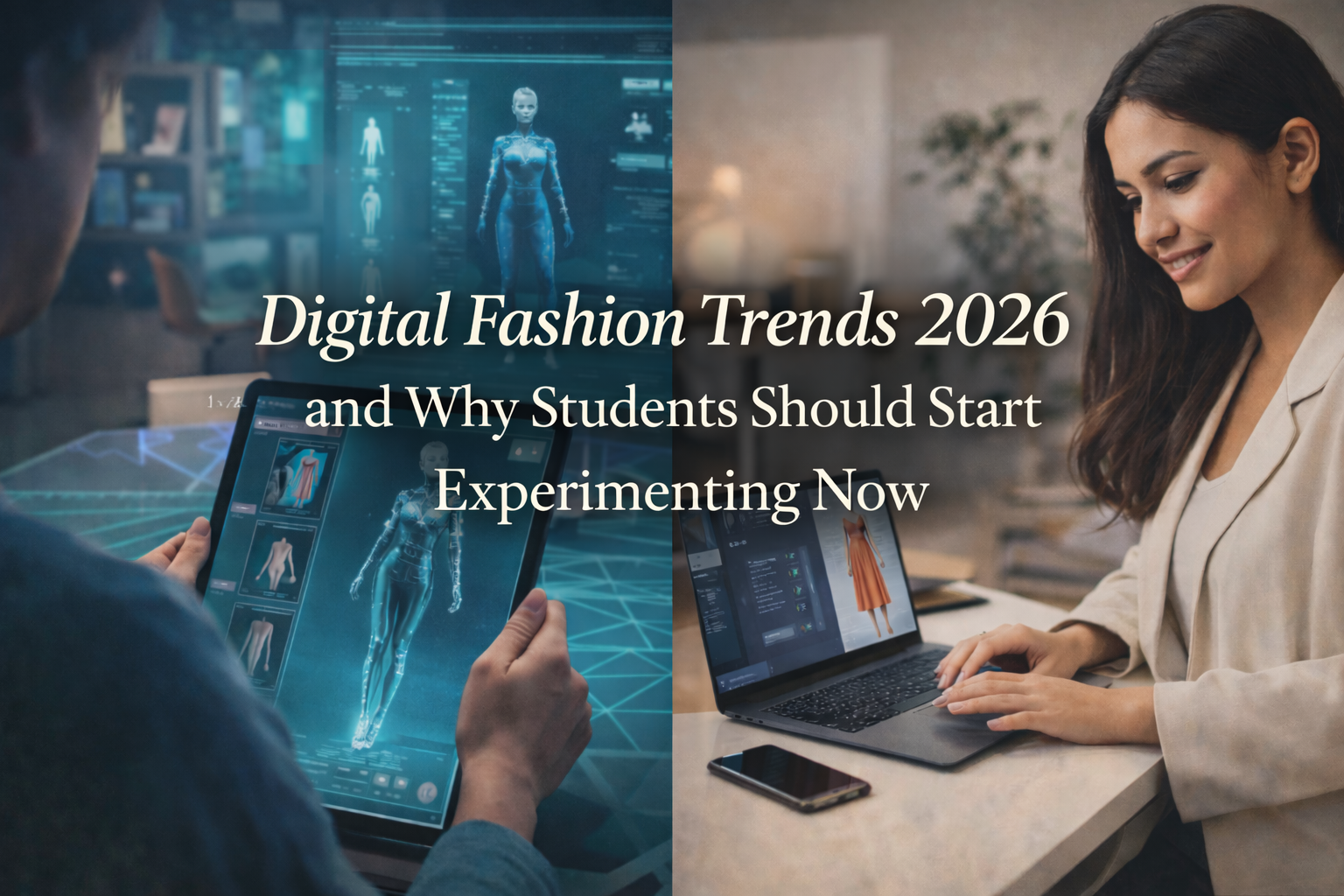
Fashion is no longer limited to fabric, scissors, and sewing tables. Screens, software, and virtual worlds are shaping how collections are imagined and launched. For fashion design students in India, digital fashion trends 2026 will not be optional knowledge. They will be core skills employers expect by the time you graduate.
This shift is already visible in how young designers are trained. Institutes such as NIF Global increasingly encourage students to blend hands on garment construction with digital tools so graduates are ready for the direction the industry is moving.
Virtual Garments Are Becoming Real Business
Luxury brands now release digital only outfits for gaming platforms, avatars, and online campaigns. These pieces never enter physical production, yet they generate visibility, revenue, and cultural relevance. For students, this opens an entirely new playground where creativity is not limited by fabric cost or manufacturing timelines.
Digital clothing is also transforming how collections are developed. Designers create samples in 3D, test silhouettes, refine proportions, and tweak textures before cutting a single metre of fabric. It saves money, reduces waste, and speeds up decision making, all skills future employers care about.
3D Design Is Becoming a Core Skill
Hand sketching still matters, but 3D tools are quickly becoming part of everyday design practice. Software such as Clo3D, Browzwear, and Blender allow students to drape garments on virtual bodies, simulate movement, and experiment with materials that might be impossible to source in college studios.
This kind of digital experimentation builds confidence fast. You can design, fail, redesign, and improve within hours, which is exactly how strong portfolios take shape.
Digital Runways and Online Showcases
Fashion shows are no longer limited to physical venues. Brands now launch collections through immersive online events, virtual exhibitions, and interactive lookbooks. Designers must understand how clothes behave on screen, under digital lighting, and inside virtual environments.
Students who begin adding animated walk cycles, rotating 3D garments, or AR try ons to their projects early often stand out during internships and campus placements.
How Students Can Start Right Now
You do not need expensive equipment to enter this space. What matters most is consistency and curiosity.
Start with:
- Learning one 3D garment tool alongside pattern drafting
- Recreating a classroom project digitally
- Designing a small virtual capsule collection
- Adding rendered visuals to your portfolio
Why Early Experimentation Makes a Difference
Waiting until graduation is risky. The designers who benefit most from digital fashion trends 2026 will be those who explored early, made mistakes while learning, and developed a hybrid identity that blends craftsmanship with technology.
Fashion is not abandoning fabric. It is expanding into new territories. Students who learn to work confidently in both physical and digital worlds will help define what comes next.

Leave a Reply