A fashion design portfolio at NIF Global Jaipur is built gradually, through classroom projects, design competitions, internships, and industry exposure, rather than in one sitting before graduation. Every year of the course adds a distinct layer to a student’s fashion design portfolio, from foundational sketches to a final collection ready for the runway. By the time students graduate, their portfolio reflects both technical skill and real industry experience.
Building the foundation in the early years
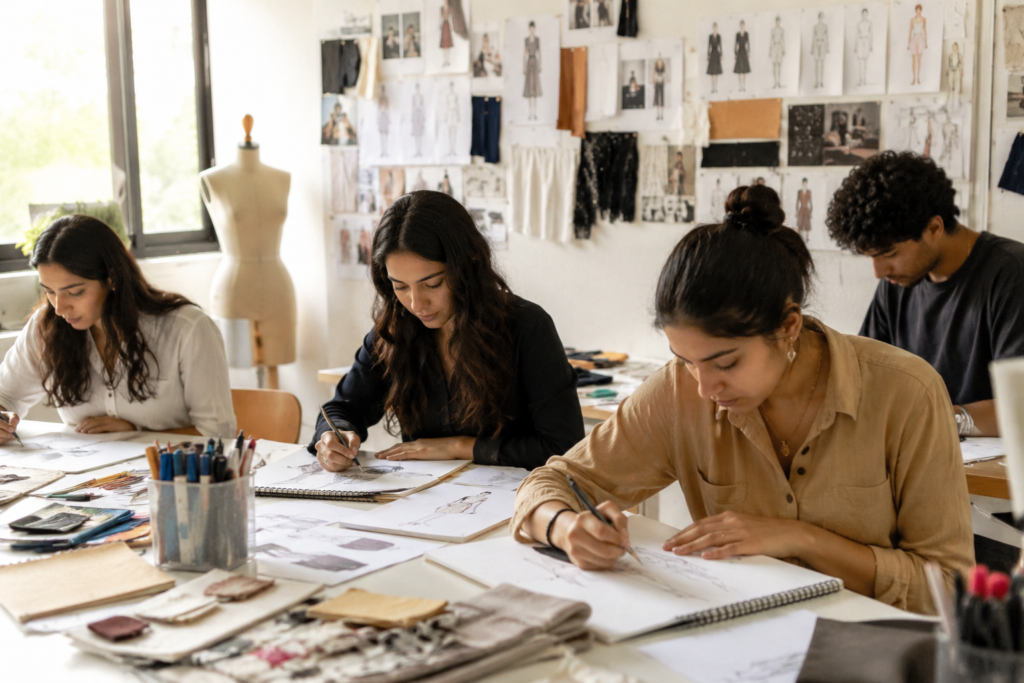
In the first year, students focus on the basics: illustration, pattern making, textile studies, and garment construction. These early assignments teach students how to document their process, not just the final output. NIF Global Jaipur encourages students to photograph every stage of a project, from mood boards to finished garments, so they build a habit of portfolio-ready documentation from day one.
How do competitions help students strengthen their portfolio?
Design competitions push students to work within briefs, deadlines, and themes set by external judges, which mirrors real industry conditions. Winning or even participating in a recognized competition adds credibility to a fashion design portfolio that classroom work alone cannot offer. Students at NIF Global Jaipur regularly take part in such competitions as part of their coursework, giving them tangible achievements to showcase to future employers.
The role of internships in portfolio building
Internships expose students to live projects, client briefs, and production timelines. Work completed during an internship, such as a capsule collection or a styling project, often becomes some of the strongest material in a portfolio because it shows the ability to deliver under professional conditions. Internships also help students understand which area of fashion, whether design, styling, or merchandising, suits them best.
Global exposure through the DMU collaboration
Collaborations with international institutions give students access to global design standards and trends. Through its partnership with De Montfort University (DMU), UK, NIF Global Jaipur offers students a pathway to international education and exposure to global fashion practices. Students who take part in such collaborations often include international project work in their portfolio, which signals a broader, more competitive skill set to employers.

What does a final-year fashion design portfolio typically include?
By the final year, a NIF Global Jaipur student’s fashion design portfolio usually includes a complete original collection, technical flats, fabric swatches, and a well-documented design process from concept to finished garment. This is the portfolio students carry into placement interviews and industry meetings. NIF Global Jaipur guides students through this final compilation, ensuring the portfolio is structured the way the industry expects to see it.
FAQ’s
Q1. When should students start building their fashion design portfolio?
NIF Global Jaipur advises students to start documenting their work from the first year itself. Early projects, however small, form the foundation of a strong final portfolio.
Q2. Do internships count toward the final portfolio?
Yes. Work completed during internships often becomes some of the most compelling material in a student’s portfolio, as it reflects real industry conditions.
Q3. What international opportunities does NIF Global Jaipur offer for portfolio building?
NIF Global Jaipur’s collaboration with De Montfort University, UK, gives students exposure to global design standards, which they can incorporate into their portfolios.
Q4. What should a final-year fashion design portfolio include?
A complete original collection, technical flats, fabric details, and a documented design process from concept to final garment.
Q5. Does NIF Global Jaipur help students prepare their portfolio for placements?
Yes. NIF Global Jaipur guides students through structuring their portfolio to match industry expectations before placement interviews.

Leave a Reply