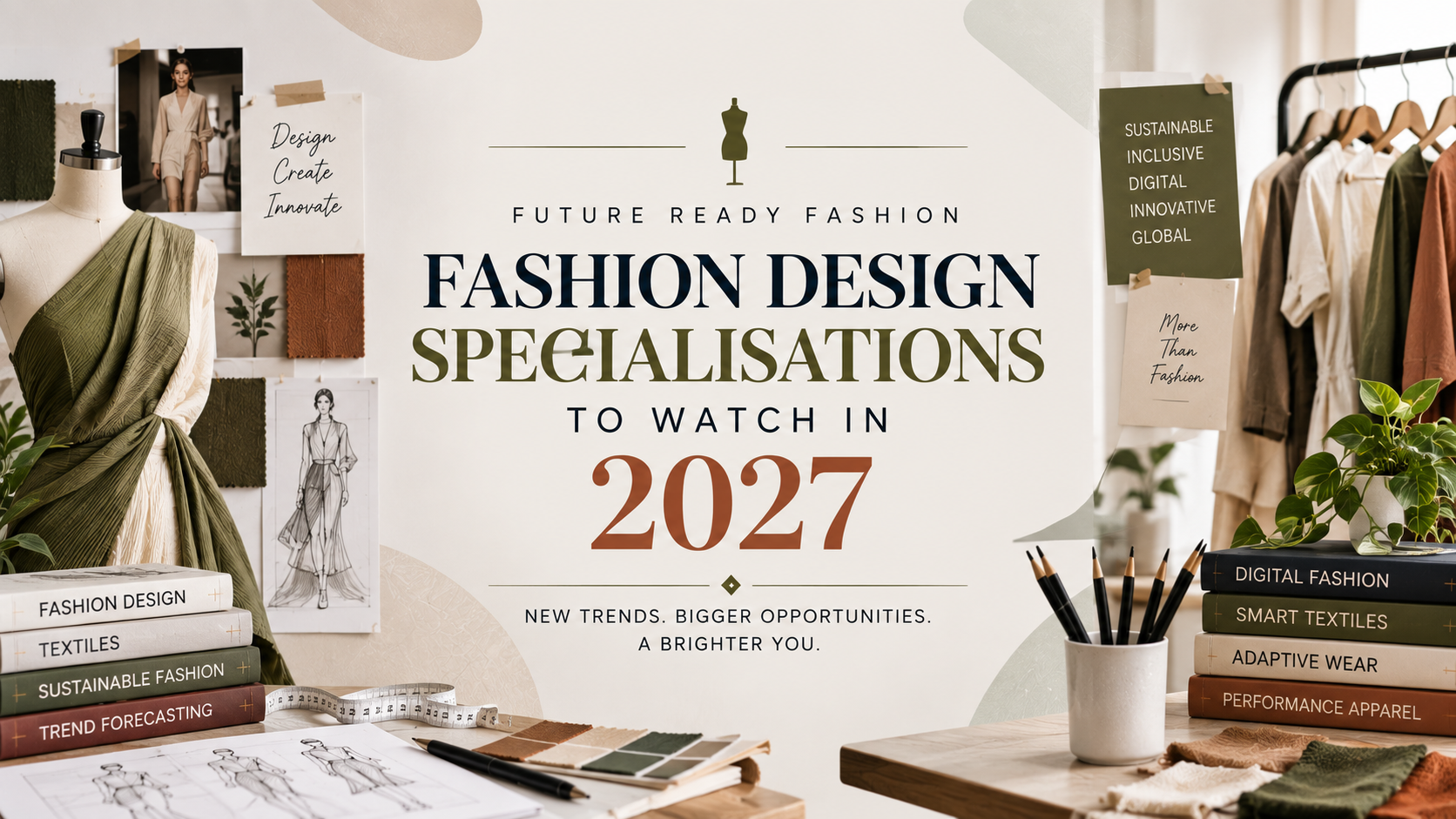
The fashion industry is evolving with sustainability, artificial intelligence, digital technology, and changing consumer needs. As a result, fashion design specializations such as sustainable fashion, digital fashion, performance apparel, smart textiles, and adaptive clothing could see growing relevance in 2027. NIF Global Jaipur prepares aspiring designers to understand these evolving directions through industry-oriented fashion education.
Which Fashion Design Specializations Could Grow in Demand?
1. Sustainable & Circular Fashion Design
Sustainability is becoming central to fashion as brands explore ways to reduce waste and environmental impact. Circular fashion designers focus on creating garments for longevity, repair, disassembly, reuse, and recycling.
Key skills: Zero-waste pattern drafting, upcycling, low-impact dyeing, bio-based textiles, and sustainable material development.
Career paths: Circular Design Specialist, Sustainable Material Innovator, and Eco-Textile Developer.
2. 3D & AI Digital Fashion Design
Digital sampling and 3D garment design can reduce physical sampling, speed up product development, and support virtual fashion experiences. Designers are also beginning to use AI for ideation and visual development.
Key skills: CLO 3D, Browzwear, Style3D, digital fabric simulation, and AI-assisted design workflows.
Career paths: 3D Garment Technical Designer, AI Fashion Technologist, and Virtual Asset Designer.
3. Technical & Performance Apparel Design
The growth of sportswear, athleisure, and outdoor apparel is creating opportunities for designers who combine aesthetics with functionality. This specialization focuses on comfort, movement, weather protection, and technical construction.
Key skills: Performance textiles, garment specifications, seam-sealing, and technical pack development.
Career paths: Technical Apparel Designer, Performance Sportswear Developer, and Outdoor Apparel Designer.
4. Smart Textiles & Wearable Fashion
Fashion and technology are increasingly converging through smart textiles, sensors, and wearable products. Designers in this field may work on garments that integrate technology while maintaining comfort and visual appeal.
Key skills: Conductive materials, flexible circuits, wearable technology, and human-centered design.
Career paths: Wearable Experience Designer, Smart Apparel Specialist, and Wearable Product Developer.
5. Adaptive & Inclusive Apparel Design
Inclusive fashion focuses on creating clothing for diverse bodies, abilities, and sensory needs. Features such as magnetic closures, adjustable fits, and accessible garment construction can make fashion more functional and inclusive.
Key skills: universal design, specialized fit analysis, adaptive closures, and sensory-friendly design.
Career paths: Adaptive Apparel Specialist, Universal Fit Designer, and Technical Patternmaker.
Why Should Fashion Students Explore These Specializations?
The future of fashion design is likely to require a combination of creative, technical, and digital skills. Students who understand emerging technologies, sustainable materials, and evolving consumer needs can build more adaptable careers.
With 30+ years of legacy, 35,000+ students, and 1 lakh+ alumni, NIF Global Jaipur offers an industry-focused learning environment. Its ecosystem includes celebrity mentors such as Manish Malhotra, Gauri Khan, and Twinkle Khanna, along with accreditations and associations involving NSDC, Skill India, Medhavi Skills University, and De Montfort University, UK. Global collaborations include Dubai Fashion Week, the London School of Trends, and Monacelli Italy.
Looking Ahead: Fashion Design Careers in 2027
As the fashion industry evolves, exploring emerging fashion design specializations can help aspiring designers prepare for new creative and professional opportunities. The NIF Global Fashion Designing Course can provide a foundation in fashion design while helping students develop the creative, technical, and industry-oriented skills needed to navigate a changing fashion landscape.
FAQ’s
Q1. Which fashion design specialization will be in demand in 2027?
Sustainable fashion, digital fashion, performance apparel, smart textiles, and adaptive fashion are areas that could see growing demand.
Q2. Is sustainable fashion a good career option?
Yes. Sustainability is influencing materials, production, product development, and circular business models across fashion
Q3. How is AI changing fashion design?
AI can support research, concept development, visual ideation, design exploration, and digital product development.
Q4. What is 3D fashion design?
3D fashion design uses digital tools to create and simulate garments virtually, helping designers visualize fit, fabrics, and construction.
Q5. Why should students learn digital fashion design?
Digital skills can complement traditional design abilities and prepare students for increasingly technology-driven fashion workflows.

Leave a Reply