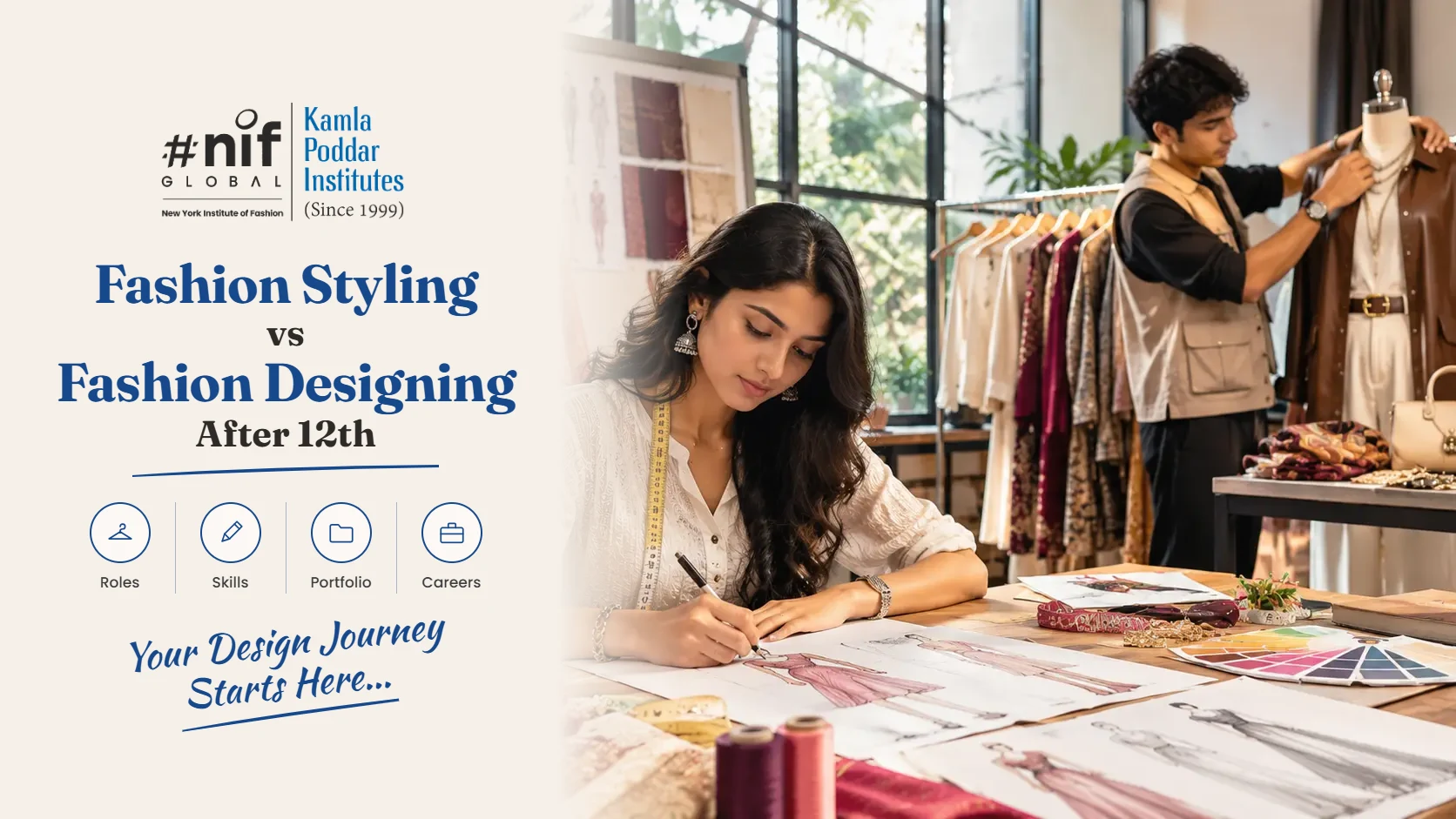
If you enjoy experimenting with outfits, following fashion trends or imagining your own clothing collections, you may have considered a career in the fashion industry. But before choosing a course after Class 12, it is important to understand the difference between fashion styling and fashion designing.
Both careers involve creativity, colours, fabrics and an understanding of personal expression. However, the work they involve can be quite different. Fashion designers develop clothing and accessories, while fashion stylists select, combine and present fashion products to create looks for individuals, brands and visual projects.
Understanding fashion styling vs fashion designing can help students identify the skills they want to build, the kind of projects they enjoy and the education pathway that best supports their goals.
This guide explains the responsibilities, skills, courses, portfolios and career opportunities associated with both professions, especially for students exploring fashion education after Class 12.
What Is Fashion Designing?
Fashion designing is the creative and technical process of developing clothing, accessories and fashion products. It involves transforming ideas into designs that can be sampled, refined and produced.
A fashion designer considers appearance as well as functionality, fabric behaviour, fit, construction, audience preferences and production requirements.
Depending on the role, designers may work on individual garments, complete collections, uniforms, accessories or specialised categories such as occasionwear, sportswear and sustainable fashion.
What Does a Fashion Designer Do?
A typical fashion design project may involve:
- Researching trends, customer preferences and design references
- Developing a creative concept and mood board
- Sketching original garments or accessories
- Selecting suitable fabrics, colours and surface details
- Working with patterns, measurements and garment construction
- Reviewing samples and making improvements
- Collaborating with production, merchandising or marketing teams
Not every designer personally stitches every garment. Responsibilities vary between independent designers, fashion houses, manufacturing businesses and larger apparel brands.
What Is Fashion Styling?
Fashion styling is the process of selecting, coordinating and presenting clothing and accessories to create a particular appearance or communicate a visual idea.
A fashion stylist may work with existing garments from designers, fashion labels, showrooms or personal wardrobes. The task is to develop a look suited to a person, event, brand identity or creative brief.
Fashion styling involves much more than choosing attractive clothes. Stylists consider proportions, colour combinations, context, comfort, photography, storytelling and how the overall presentation communicates with an audience.
What Does a Fashion Stylist Do?
Depending on the assignment, a fashion stylist may:
- Understand the client’s requirements or creative brief
- Research fashion references and develop styling mood boards
- Select outfits, shoes, jewellery and other accessories
- Source garments from brands, designers or showrooms
- Coordinate fittings and outfit adjustments
- Work with photographers, makeup artists and creative teams
- Manage outfits during photoshoots, events or productions
- Organise wardrobe records, returns and styling logistics
Some stylists work primarily with individual clients, while others specialise in editorial photography, advertising, fashion shows or e-commerce.
Fashion Styling vs Fashion Designing: Key Differences
The main difference between fashion styling and fashion designing lies in what each professional creates and how they approach a project.
| Factor | Fashion Designing | Fashion Styling |
| Primary focus | Creating and developing fashion products | Selecting and presenting clothing and accessories |
| Typical starting point | Design brief, concept or product requirement | Client, occasion or visual communication brief |
| Main activities | Research, sketching, material selection and product development | Research, sourcing, outfit coordination and presentation |
| Technical emphasis | Textiles, fit, patterns and garment development | Proportion, visual coordination, wardrobe management and styling logistics |
| Typical output | A garment, accessory, prototype or collection | A complete styled look or visual presentation |
| Possible workplaces | Fashion labels, design studios and apparel businesses | Photoshoots, media productions, brands and personal styling services |
| Portfolio examples | Design sketches, technical work and garment projects | Styled looks, mood boards and photoshoot projects |
| Commonly shared skills | Creativity, trend awareness, colour understanding, research, teamwork and communication | |
These differences describe typical professional roles, not rigid boundaries. Some fashion designers style their own collections, while stylists may collaborate closely with designers during product launches and editorial projects.
Fashion Designer vs Fashion Stylist: A Real-World Project Example
Consider a fashion brand preparing a campaign for a new festivewear collection.
The Fashion Designer’s Role
The designer begins by understanding the collection’s theme and target audience. They research colours, silhouettes, materials and garment details before developing sketches and coordinating samples.
During fittings, the designer may review fabric behaviour, proportions, construction and other details before finalising the garments.
The primary result of this work is a collection of fashion products ready to be presented or sold.
The Fashion Stylist’s Role
Once the collection is ready, the stylist develops how the garments will be presented for the campaign.
They may select which pieces appear together, coordinate accessories, plan the sequence of looks and work with the photography and beauty teams to create the desired visual identity.
The primary result is a collection of coordinated looks and images that communicate the campaign’s mood.
In simple terms: The designer develops the clothing; the stylist determines how the clothing can be combined and presented for a specific purpose.
Skills Required for Fashion Designing
Fashion designers need a combination of creative judgement, technical knowledge and practical problem-solving abilities.
Creative Thinking and Design Development
Designers must translate research, observations and inspiration into original concepts. This involves developing visual directions and refining ideas according to functional or commercial requirements.
Fashion Illustration and Visual Communication
Sketching and digital illustration can help designers explain their ideas to collaborators. Technical drawings may also be needed to communicate garment details clearly.
Fabric and Textile Knowledge
Understanding the properties of different materials is important for making appropriate choices about appearance, fit, comfort and construction.
Pattern Making and Garment Construction
Knowledge of patterns, garment structure and production processes helps designers evaluate whether their ideas can be developed into wearable products.
Research and Market Awareness
Designers should understand the intended customer, changing consumer preferences and the practical considerations involved in developing a product.
Collaboration and Time Management
Fashion projects often involve multiple people and deadlines. Designers need to communicate with sampling teams, suppliers and other professionals while reviewing progress.
Skills Required for Fashion Styling
Fashion styling combines visual creativity with communication, planning and careful attention to the details of each assignment.
Colour, Proportion and Outfit Coordination
Stylists need to understand how garments and accessories work together, including colour balance, textures, silhouettes and overall visual impact.
Trend and Brand Awareness
Recognising fashion trends, designer aesthetics and the identity of different brands helps stylists develop suitable concepts for clients and campaigns.
Client Communication
Personal styling and commercial assignments require an understanding of preferences, expectations, budgets and the intended use of the outfits.
Research and Sourcing
Stylists may need to locate particular garments, coordinate with showrooms and manage the practical details of borrowing, transporting and returning products.
Photoshoot and Event Coordination
Styling work may involve fittings, last-minute changes, outfit preparation and collaboration with photographers, makeup artists and production teams.
Creative Problem-Solving
A planned look may need adjustment because of fit, weather, lighting or availability. Stylists must adapt while preserving the intended creative direction.
Fashion Styling vs Fashion Designing After 12th: Which Course Should You Choose?
Students interested in either career can explore fashion-related education after completing Class 12. However, there is no single academic qualification required for every styling or fashion design job.
Fashion Design education may provide a foundation in clothing, textiles, visual communication and product development. Students interested in styling can also develop relevant knowledge through design education, styling-focused training, practical projects and professional experience.
Fashion Design Courses After Class 12
NIF Global Jaipur lists the following undergraduate Fashion Design programmes:
| Programme | Duration | Published Eligibility |
| B.Voc in Fashion Design | 3 years | Class 12 or equivalent |
| B.Des in Fashion Design | 4 years | Class 12 or equivalent |
Its B.Voc programme is described as project-led and practical-oriented, with lectures, workshops, industry visits and live presentations.
The B.Des programme includes areas such as luxury product development, materials, production, sustainability, marketing, communication and entrepreneurship.
Students should compare the full curriculum and learning activities before selecting a qualification.
Can You Become a Fashion Stylist After Studying Fashion Design?
Yes. Fashion Design education can provide relevant knowledge for students interested in pursuing styling as a career.
NIF Global Jaipur explicitly identifies Fashion Stylist as a potential career direction associated with its Fashion Design programmes.
However, being enrolled in a Fashion Design degree does not automatically make someone a professional stylist. Students interested in styling should also develop practical experience in outfit coordination, visual storytelling, sourcing and photoshoot work.
The institute’s published Fashion Design page does not advertise a separate undergraduate degree titled Fashion Styling. Applicants should confirm any styling-specific training or modules directly with the admissions team.
Can Arts, Commerce and Science Students Study Fashion Design?
Yes. NIF Global Jaipur’s official FAQs explain that Fashion Design is not restricted to students from the Arts stream.
Its B.Des and B.Voc Fashion Design programmes list Class 12 or equivalent as the published eligibility requirement. Students should confirm current admission conditions before applying.
Portfolio Differences: Fashion Designer vs Fashion Stylist
A portfolio helps prospective employers, collaborators and educational institutions understand how a person develops and communicates creative ideas.
However, the most useful portfolio content differs between fashion design and fashion styling.
What to Include in a Fashion Design Portfolio
- Original design sketches and illustrations
- Research references and design mood boards
- Colour palettes, fabric selections and material studies
- Garment development and technical drawings
- Photographs of completed samples or garments
- Explanations of design decisions and improvements
What to Include in a Fashion Styling Portfolio
- Styling concepts and visual mood boards
- Complete looks created for different briefs
- Photographs from collaborative or personal styling projects
- Outfit and accessory coordination examples
- Brief explanations of styling choices
- Credits for photographers, models and other collaborators, where relevant
Students should include original work, obtain permission before using collaborators’ photographs and accurately describe their own contribution to each project.
Two Beginner Projects to Explore Both Careers
If you are unsure whether fashion styling or designing suits you, try a small project in each field before choosing your educational direction.
Project 1: Create a Mini Fashion Collection
Choose a theme, such as contemporary festivewear or everyday streetwear. Research your audience, develop a mood board and sketch three coordinated garment designs.
For each garment, explain the proposed fabric, silhouette, colours and intended use. If possible, develop a simple fabric or construction sample.
This exercise introduces the research and product-development thinking involved in fashion design.
Project 2: Style Three Looks Using Existing Clothes
Select a visual theme and create three different outfits using existing garments and accessories.
Experiment with proportions, colours, layering and footwear. Photograph the looks and explain how each one responds to a different occasion or audience.
This exercise helps you explore the coordination, presentation and storytelling involved in fashion styling.
After completing both projects, consider which activity you enjoyed more: developing a new product or presenting existing products in a new way.
Career Options in Fashion Designing
Fashion Design education can support different professional directions, depending on an individual’s skills, portfolio and experience.
Possible career paths include:
- Fashion Designer: Developing clothing or accessories for individuals and brands.
- Apparel Designer: Creating garments for specific clothing categories and markets.
- Costume Designer: Developing costumes for performance, media or entertainment productions.
- Fashion Illustrator: Communicating fashion concepts through illustrations.
- Product Development Assistant: Supporting the development of garments from concept to production.
- Fashion Entrepreneur: Building a clothing label or other fashion-related business.
Different roles may require additional technical preparation, industry experience or specialised training.
Career Options in Fashion Styling
Fashion styling also offers several possible professional directions:
- Personal Stylist: Helping individuals select clothing for their lifestyle and needs.
- Editorial Stylist: Creating looks for magazines, photography and editorial content.
- Commercial Stylist: Styling products and models for advertising campaigns.
- E-commerce Stylist: Preparing outfits for online fashion catalogues and product photography.
- Wardrobe Stylist: Coordinating outfits for productions, performances or public appearances.
- Fashion Styling Assistant: Supporting sourcing, fittings, preparation and on-set coordination.
Some professionals work within organisations, while others operate independently on a project basis. Freelance opportunities may involve irregular schedules and variable income.
Is Fashion Styling Easier Than Fashion Designing?
Neither career is inherently easier. They involve different types of technical and creative challenges.
Fashion designing can require substantial knowledge of garment development, fabrics, construction and product requirements.
Fashion styling can require demanding coordination, quick decision-making, communication and an ability to work under changing production conditions.
Both careers require continual learning, attention to detail and professional discipline.
Which Has Better Career Scope: Fashion Styling or Fashion Designing?
There is no universal answer. Opportunities depend on the type of work, location, professional experience, portfolio quality and changing market needs.
Fashion designers may find opportunities with apparel brands, manufacturers, design studios and independent labels.
Fashion stylists may work on commercial photography, fashion media, retail, events, personal styling and entertainment-related assignments.
Some projects bring both professions together, creating opportunities for collaboration rather than competition.
Students should avoid choosing a career based only on unverified salary estimates or the visibility of celebrity professionals. Investigate entry-level responsibilities, actual job requirements and the skills needed to progress.
How to Decide Between Fashion Styling and Fashion Designing
Before choosing a path, ask yourself:
- Do I enjoy creating original garments or coordinating existing clothing?
- Am I interested in fabrics, garment construction and product development?
- Do I enjoy visual storytelling, photography and working with different looks?
- Would I prefer developing products over time or working on varied styling assignments?
- Which practical skills am I most motivated to learn?
- Does my preferred course actually teach the skills I need?
If you enjoy both, consider a Fashion Design education that offers relevant creative and technical foundations, and build styling experience through separate projects, collaborations or appropriate additional training.
Explore Fashion Design Education at NIF Global Jaipur
NIF Global Jaipur offers Fashion Design pathways for students interested in developing creative, technical and professional abilities within the fashion industry.
The institute lists a three-year B.Voc and four-year B.Des in Fashion Design, along with certificate and postgraduate pathways.
Its published career options include Fashion Designer, Fashion Stylist, Costume Designer, Visual Merchandiser, Fashion Illustrator and other fashion-related professions.
Visit the Fashion Design Courses at NIF Global Jaipur page to explore programme options.
Interested in a fashion career after Class 12? Connect with the NIF Global Jaipur admissions team to understand programme eligibility, course structure and how the available pathways may support your interests in fashion designing or styling.
Frequently Asked Questions
Q1. What is the main difference between fashion styling and fashion designing?
Fashion designing focuses on developing garments and other fashion products. Fashion styling focuses on selecting, coordinating and presenting clothing and accessories for clients, brands or visual projects.
Q2. Can I become a fashion stylist after studying fashion design?
Yes. Fashion Design education can provide relevant knowledge, although students should also build styling-specific practical experience and a portfolio. NIF Global Jaipur identifies Fashion Stylist as a possible career pathway from Fashion Design.
Q3. Which course is suitable for fashion designing after Class 12?
Students can consider suitable undergraduate design qualifications. NIF Global Jaipur lists a three-year B.Voc and four-year B.Des in Fashion Design, both with Class 12 or equivalent as the published eligibility requirement.
Q4. Is a separate fashion styling degree compulsory to become a stylist?
No single degree is compulsory for every fashion styling role. Relevant education, practical skills, portfolio quality and experience are important. Individual employers may have specific qualification requirements.
Q5. Can Commerce or Science students pursue Fashion Design?
Yes. NIF Global Jaipur’s official FAQs confirm that Fashion Design is not restricted to Arts students. Applicants must still satisfy the eligibility conditions of the chosen programme.
Q6. Do fashion stylists need to know stitching?
Stitching is not a universal requirement for styling work. However, understanding garment construction, fit and alterations can be useful when coordinating outfits and fittings.
Q7. What should a beginner fashion stylist include in a portfolio?
A beginner portfolio can include original mood boards, completed looks, photographs, outfit breakdowns and explanations of how each styling brief was approached.
Q8. Can someone work in both fashion styling and fashion designing?
Yes. The skills can complement each other, and some professionals develop experience in both areas. Each discipline has its own specialist requirements, so practical learning remains important.
Conclusion
Understanding fashion styling vs fashion designing helps students make better decisions about their education and professional direction after Class 12.
Fashion designers focus primarily on developing fashion products, while fashion stylists focus on creating looks and visual presentations using clothing and accessories.
Both careers require creativity, industry awareness and practical skills, but the everyday responsibilities and portfolio expectations differ.
Before choosing a course, explore both types of work, try beginner projects and assess whether the curriculum supports your long-term goals.
For students considering Fashion Design education in Jaipur, NIF Global Jaipur offers undergraduate programmes and additional pathways worth exploring with the admissions team.
Leave a Reply