
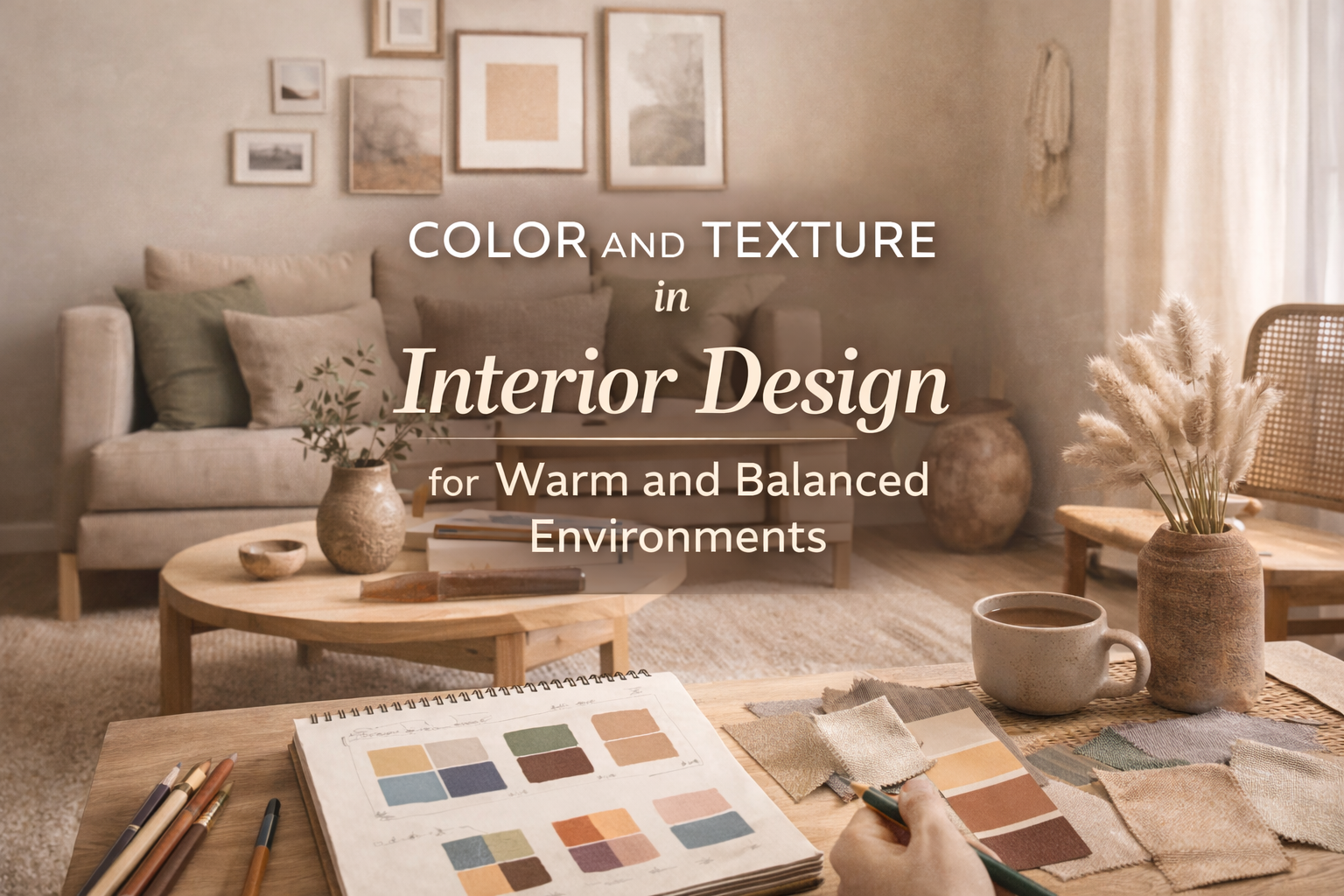
A well-designed interior is not defined by furniture alone. What truly shapes how a space feels is the relationship between color and texture. When used thoughtfully, these elements bring warmth, depth, and balance to a room. Understanding color and texture in interior design helps designers move beyond surface-level styling and create spaces that feel calm, functional, and emotionally engaging.
Why Color and Texture Matter Together
Color influences mood, while texture influences how a space feels physically and visually. When the two work together, interiors feel layered and intentional. A room with good color choices but flat surfaces can feel lifeless. On the other hand, heavy textures without a clear color direction can feel cluttered. Balance comes from using both with purpose.
Designers today focus less on bold statements and more on creating environments that support daily living. Warm, balanced interiors are especially important in homes, workspaces, and learning environments where comfort matters.
Using Color to Set the Emotional Tone
Colors affect how people experience a space almost instantly. Soft neutrals, warm earth tones, and muted shades are commonly used to create a sense of calm. Beige, warm grey, clay, olive, and soft browns help interiors feel grounded and relaxed.
Designers often build a color palette with one dominant neutral and one or two supporting tones. This approach keeps the space cohesive while allowing flexibility. Accent colors should feel intentional rather than decorative. When color is controlled, the space feels easier to live in.
How Texture Adds Depth and Warmth
Texture brings character to interiors. Even a neutral room can feel rich when different surfaces interact. Materials like wood, linen, wool, stone, cane, and clay add visual interest without overwhelming the design.
Textures work best when layered. A smooth wall paired with a woven rug or a soft fabric sofa next to a wooden table creates contrast that feels natural. This layering is especially effective in warm interiors, where comfort is a priority.
Creating Balance Through Layering
The key to using color and texture in interior design is moderation. Too many finishes can make a space feel chaotic, while too few can make it feel flat. Designers aim for harmony by repeating materials and tones across the room.
For example, a warm-toned wall color can be echoed through wooden furniture, soft textiles, or handmade decor. Textures should support the color palette, not compete with it. This repetition helps the space feel unified.
A practical way to think about layering is:
- Start with a base color that sets the mood
- Introduce natural textures through furniture or finishes
- Add softer textures with fabrics and accessories
Each layer adds comfort without crowding the space.
Applying These Principles in Real Projects
In interior design studios at NIF Global, learners are encouraged to explore color and texture through material boards and spatial studies. By testing fabric swatches, surface samples, and lighting together, they learn how subtle changes affect the overall feel of a space. This hands-on approach builds strong visual judgement and prepares designers for real-world projects.
Designers working on compact homes often rely on lighter colors and layered textures to make spaces feel open yet warm. Larger spaces allow for deeper tones and heavier textures, but the principle of balance remains the same.
Avoiding Common Mistakes
One common mistake is relying too much on color trends without considering texture. Another is mixing too many materials without a clear reason. Warm interiors do not need excessive decoration. They need clarity.
Always ask whether a material adds comfort, contrast, or purpose. If it does not, it probably does not belong in the space.
Closing Perspective
Warm and balanced interiors are built on thoughtful choices, not excess. When color sets the emotional direction and texture adds depth, spaces become more inviting and functional. Designers who understand color and texture in interior design develop a stronger sense of control and create environments that feel lived-in, calm, and complete.
Leave a Reply