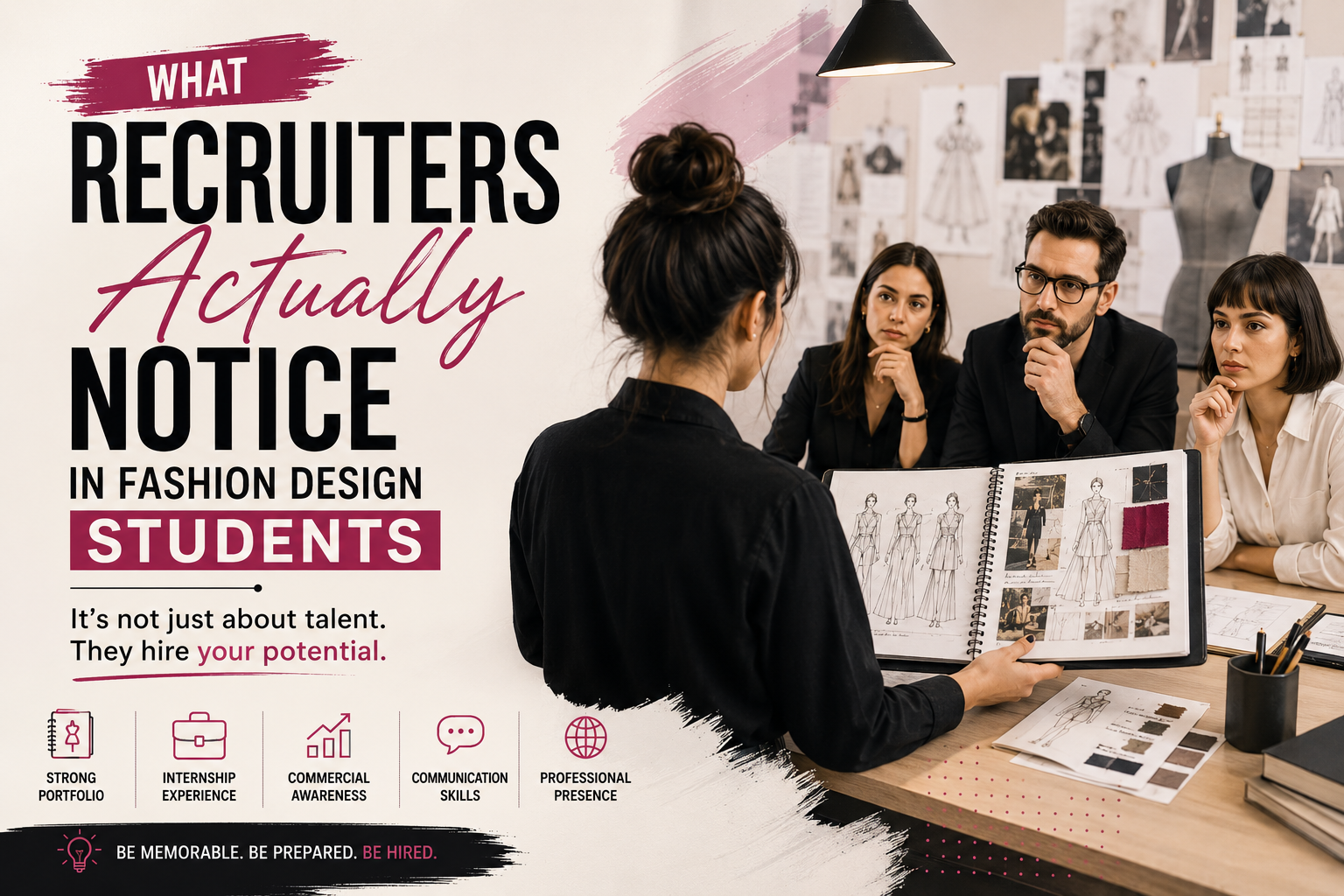
Recruiters do not hire fashion design students based on grades or college reputation alone. At NIF Global Jaipur, students are trained to present themselves the way the industry actually evaluates talent through portfolios, real internship exposure, communication, and commercial awareness. Here is what hiring managers at fashion labels, retail brands, and design studios genuinely look for when they meet a fresh graduate.
Your Portfolio Is Not a Photo Album
This is the most common mistake students make. They treat the portfolio like a lookbook, showing only final, polished pieces, perfectly lit and arranged. Recruiters see hundreds of these. What actually makes a recruiter pause is the process. A strong portfolio shows the following:
- Research pages and references that reveal where the concept came from
- Rough sketches and early drafts that show how the idea evolved
- Fabric trials and experiments, including the ones that did not work
- A final resolved outcome that ties the journey together
Keep it to six to eight projects maximum. If you include everything you have ever made, you are telling the recruiter you cannot make decisions, which is exactly the kind of person they do not want on a design team. At NIF Global Jaipur, students build industry-ready portfolios from their first year. The curriculum is structured around real briefs, seasonal collections, and mentor reviews, so by graduation, the portfolio reflects genuine creative development rather than a collection of assignments.
Internship Experience Is Worth More Than Your Marksheet
A recruiter at a Jaipur-based export house once said bluntly, “I would take a student with six months of internship experience over a topper with no exposure, any day.”
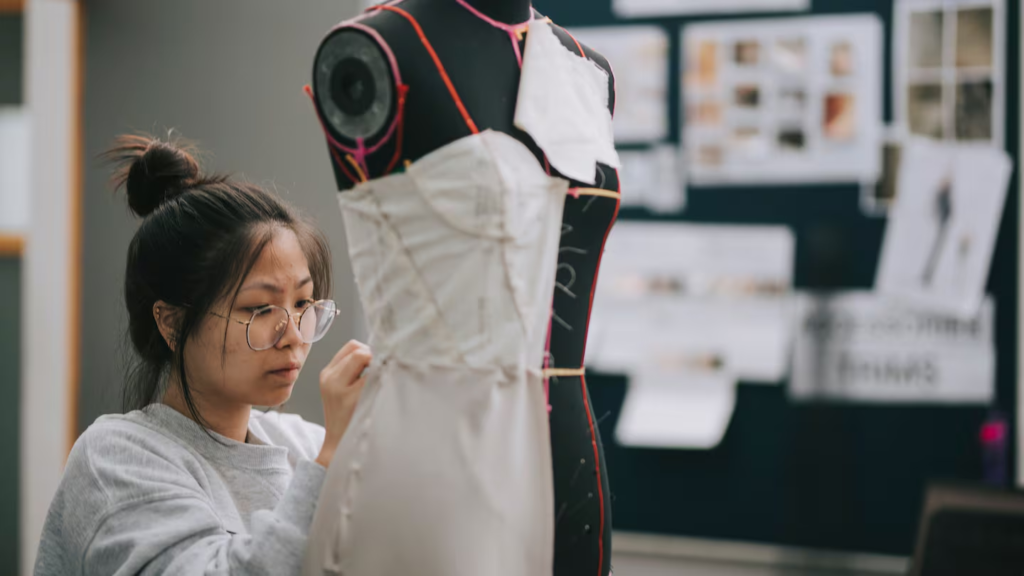
Fashion design students who have interned understand how a studio actually runs. Here is what real studio exposure teaches you that college simply cannot:
- Working on a client brief you did not write and have no say in changing
- Redoing a pattern at 11pm the night before a deadline
- Managing fabric shortages or supplier delays mid-production
- Taking feedback from a senior without getting defensive about your design choices
If you have interned, talk about what went wrong as much as what went right. Recruiters want to hear how you handled pressure, not just that you were present. NIF Global Jaipur has active industry tie-ups with brands and studios across Jaipur, Delhi, and Mumbai, giving students structured internship placements as part of their program, not as an afterthought.
Commercial Awareness Separates Serious Candidates from Dreamers
Most fashion design students can sketch. Not many can answer questions like
- Why does this price point matter for this customer segment?
- What does a buyer look for in a collection targeting a Tier 2 city market?
- Why are fast fashion brands investing heavily in digital-only collections right now?
Recruiters notice very quickly whether a candidate understands the business side of fashion. You do not need to be an MBA. You need to have opinions.
Start here before your next interview:
- Read WWD, Vogue Business, or Apparel Resources once a week
- Study the brand you are applying to, their best-selling category, price range, and last season’s campaign
- Form a view on one trend or shift in the market and be ready to talk about it
Fashion design students who walk into an interview with that level of preparation are genuinely rare. Be that person.
Communication in the Room Changes Everything
Recruiters are not just assessing your portfolio. They are assessing whether they can put you in front of a buyer, a vendor, or a senior designer. Fashion design students who cannot explain their own creative choices clearly, without rambling or over-defending, immediately lose credibility.
Two things to practice before any interview:
Talking about your work honestly. Be able to say something like, “I chose this fabric because the handle suited the draped silhouette, but in hindsight the weight made construction difficult.” That kind of specific, honest reflection shows maturity.
Asking good questions. Questions like “What does the first 90 days look like for this role?” or “How does your team approach a new seasonal brief?” signal that you are thinking like a professional, not just hoping to get selected.
What Your Online Presence Says Before You Even Walk In
Before most interviews, someone has already searched your name. Here is what a strong digital presence looks like for students:
- A clean Instagram feed that includes process shots, not just final outcomes
- A Behance or personal website with your best three to five projects
- A LinkedIn profile that lists your internships, skills, and a short bio written in your own voice
You do not need to be an influencer. You need to look like someone who takes their work seriously. Post a mood board you built for a project. Share a fabric sourcing challenge you solved. Write two lines about a collection that inspired you. These small signals add up.
Ready to Build a Career, Not Just a Degree?
The fashion design students who get hired fastest are not always the most talented in the room. They are the most prepared, the most self-aware, and the most commercially grounded. If you want to build those qualities alongside your creative skills, explore the fashion design programs at NIF Global Jaipur, structured to prepare you for the industry from day one.
FAQ’s
Q1. What do recruiters look for first when reviewing fashion design students?
Most recruiters look at the portfolio first, specifically for evidence of creative process and not just finished outcomes. Fashion design students who document their ideation, experimentation, and revisions give recruiters a much clearer picture of how they think and work independently.
Q2. Does the college name matter when hiring fashion design students in India?
It matters less than most students assume. What matters far more is the quality of the portfolio, relevant internship experience, and how confidently the candidate speaks about their work. NIF Global Jaipur, backed by 30-plus years of legacy and 35,000-plus trained students, is recognized by leading brands and studios across India, which gives its graduates a credible foundation to stand on.
Q3. How important is technical skill compared to creativity for fashion design students?
Technical skill is the entry requirement, not the differentiator. Recruiters expect students to know the basics of construction, draping, and software like Illustrator. What sets candidates apart is the ability to apply those skills creatively under real constraints, including tight deadlines, budget limits, and changing briefs.
Q4. Do fashion design students need a social media presence to get hired?
Not in the influencer sense. But a clean, intentional digital portfolio, whether on Instagram, Behance, or a personal website, does help recruiters form a first impression before the interview. Fashion design students at NIF Global Jaipur are guided on building professional digital portfolios as part of their industry preparation.
Q5. What can fashion design students do right now to improve their chances of being hired?
Start documenting your process, not just your output. Seek out internships, even short ones. Read industry news regularly. Practice talking about your work out loud. These habits, built consistently during your course, make a measurable difference by the time you graduate.

Leave a Reply