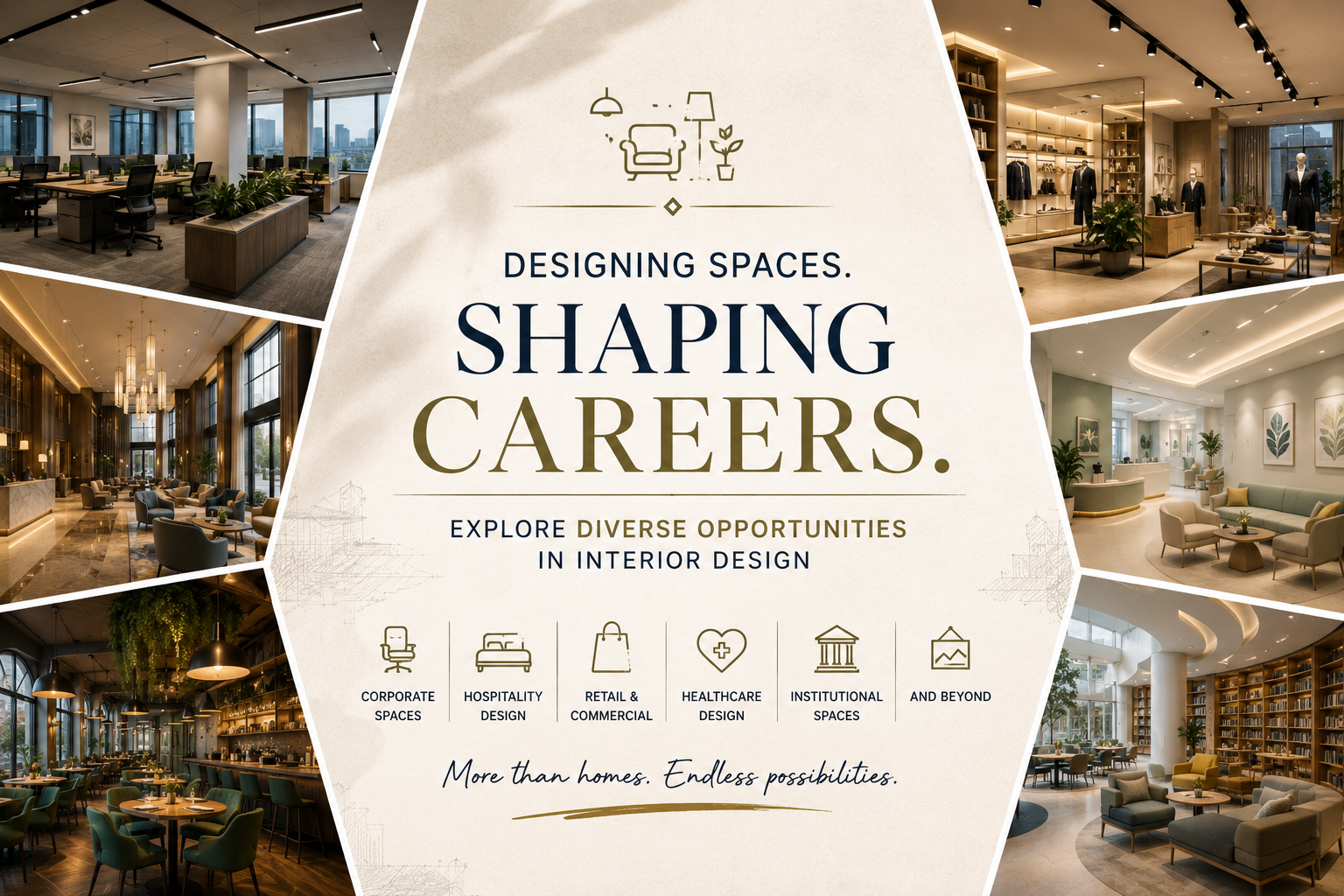
When most people think of interior design, they picture beautifully designed homes. While residential design is a major part of the profession, it is only one of many interior design career opportunities available today. Interior designers are increasingly shaping offices, hotels, retail stores, healthcare facilities, educational institutions, and luxury commercial spaces. At NIF Global Jaipur, students are prepared for these diverse career paths through industry-focused learning, practical training, and exposure to the latest design trends.
What Interior Design Career Opportunities Exist Beyond Residential Design?
The role of an interior designer has evolved significantly. Modern businesses understand that well-designed spaces improve productivity, customer experience, employee wellbeing, and even business performance. As a result, designers are now working across industries that require creativity, technical expertise, and problem-solving skills.
Unlike residential projects, commercial interiors often involve larger budgets, complex building regulations, accessibility standards, and collaboration with architects, engineers, and project managers. This opens up exciting opportunities for students who want to work on large-scale and impactful projects.
Which Industries Offer the Best Interior Design Career Opportunities?
Corporate and Workplace Design
Modern workplaces are designed to encourage collaboration, creativity, and employee wellbeing. Interior designers create functional office layouts, meeting spaces, reception areas, and collaborative zones while considering ergonomics, lighting, acoustics, and corporate branding.
Typical employers include corporate offices, technology companies, co-working spaces, and commercial design firms.
Hospitality Design
Hospitality is one of the most creative specializations in interior design. Designers create memorable guest experiences for hotels, resorts, restaurants, cafés, and luxury retreats by combining aesthetics with functionality.
This field focuses on ambience, lighting, material selection, space planning, and creating interiors that reflect a brand while withstanding heavy public use. As India’s tourism and hospitality sectors continue to grow, this remains one of the most sought-after interior design career opportunities.
Retail and Commercial Design
Retail designers transform a brand’s identity into a physical shopping experience. Every design decision, from store layout to lighting and product displays, influences how customers interact with a space.
Retail designers work on fashion stores, shopping malls, showrooms, supermarkets, and pop-up stores, helping businesses improve customer engagement and sales.
Healthcare and Institutional Design
Healthcare interior design combines creativity with functionality to create spaces that support patient comfort, safety, and recovery. Designers work on hospitals, clinics, wellness centres, and senior living facilities while following strict hygiene and accessibility standards.
Institutional designers create schools, universities, libraries, museums, and public buildings that are durable, flexible, and accessible for diverse users.
What Other Career Paths Can Interior Designers Explore?
Beyond these sectors, interior designers can also specialize in:
- Exhibition and museum design
- Luxury interior design
- Furniture and product design
- Set design for films and television
- Event and experiential design
- 3D visualization and BIM (Building Information Modelling)
As technology becomes an integral part of the design process, professionals skilled in software such as AutoCAD, Revit, SketchUp, and Lumion are increasingly in demand across the industry.
What Skills Do Employers Look For?
To succeed in commercial interior design, students need more than creativity. Employers look for professionals who understand space planning, technical drawings, sustainable design, material selection, lighting, project management, and commercial building regulations.
Strong software skills in AutoCAD, Revit, SketchUp, and 3D visualization tools also give graduates a competitive advantage. Communication, teamwork, and presentation skills are equally important, as designers regularly collaborate with clients and multidisciplinary project teams.
How Does NIF Global Jaipur Prepare Students for These Careers?
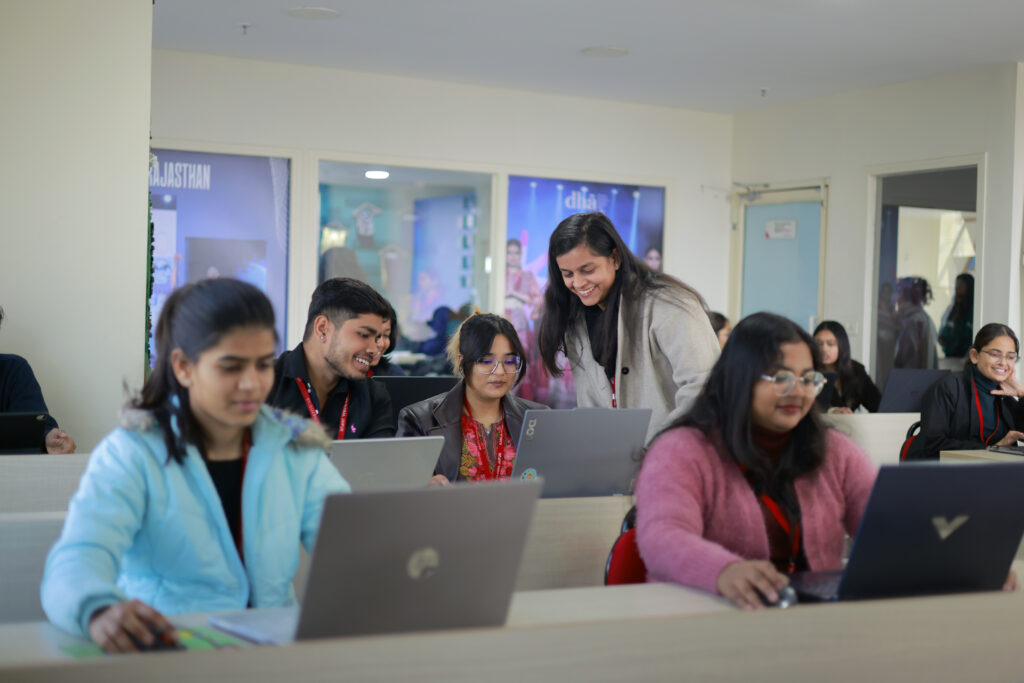
NIF Global Jaipur equips students with the creative and technical skills needed to pursue diverse interior design career opportunities beyond residential design. Through practical learning, portfolio development, and industry exposure, students gain the confidence to work across commercial, hospitality, retail, and institutional projects.
With over 30 years of legacy, 35,000+ students trained, a network of 1 lakh+ alumni, and mentorship from industry leaders like Manish Malhotra, Gauri Khan, and Twinkle Khanna, students benefit from an education that combines creativity with real-world industry expectations. Global collaborations with Dubai Fashion Week, London School of Trends, and Monacelli Italy further broaden their exposure to international design practices.
Where Can an Interior Design Career Take You?
The future of interior design extends well beyond residential spaces. From corporate workplaces and luxury hotels to retail stores and healthcare facilities, today’s designers have countless opportunities to create meaningful, functional, and inspiring environments.
Explore the Interior Design Courses at NIF Global Jaipur to build the skills needed for these exciting interior design career opportunities and begin your journey towards a successful design career.
FAQ’s
Q1. What are the best interior design career opportunities beyond residential design?
Interior designers can build careers in commercial offices, hospitality, retail, healthcare, educational institutions, luxury interiors, exhibition design, furniture design, and 3D visualization.
Q2. Can I specialize in hospitality or commercial interiors after studying at NIF Global Jaipur?
Yes. NIF Global Jaipur prepares students with practical design skills, industry exposure, and portfolio development that support careers across multiple interior design specializations.
Q3. Which software should interior design students learn?
AutoCAD, Revit, SketchUp, Lumion, and other 3D visualization tools are widely used across commercial and hospitality design projects.
Q4. Is commercial interior design different from residential design?
Yes. Commercial projects involve larger spaces, stricter safety regulations, accessibility requirements, and designing for businesses and public users rather than individual homeowners.

Leave a Reply